Setting the scene
This is a hypothetical example, not a record of any real job. The household, the house and the dates are made up to illustrate how a common problem can be traced. Nothing here describes services performed by any business.
The imagined family finished their basement years ago and added a guest bathroom with a shower, a sink and a toilet. The room is used only when relatives visit. After a long stretch with no guests, the family notices a sewer smell in the hallway, strongest near the bathroom door.
The family also notes that the smell is strongest after the house has been closed up for several days, which fits a dry trap that has been losing gas protection gradually rather than a sudden failure.
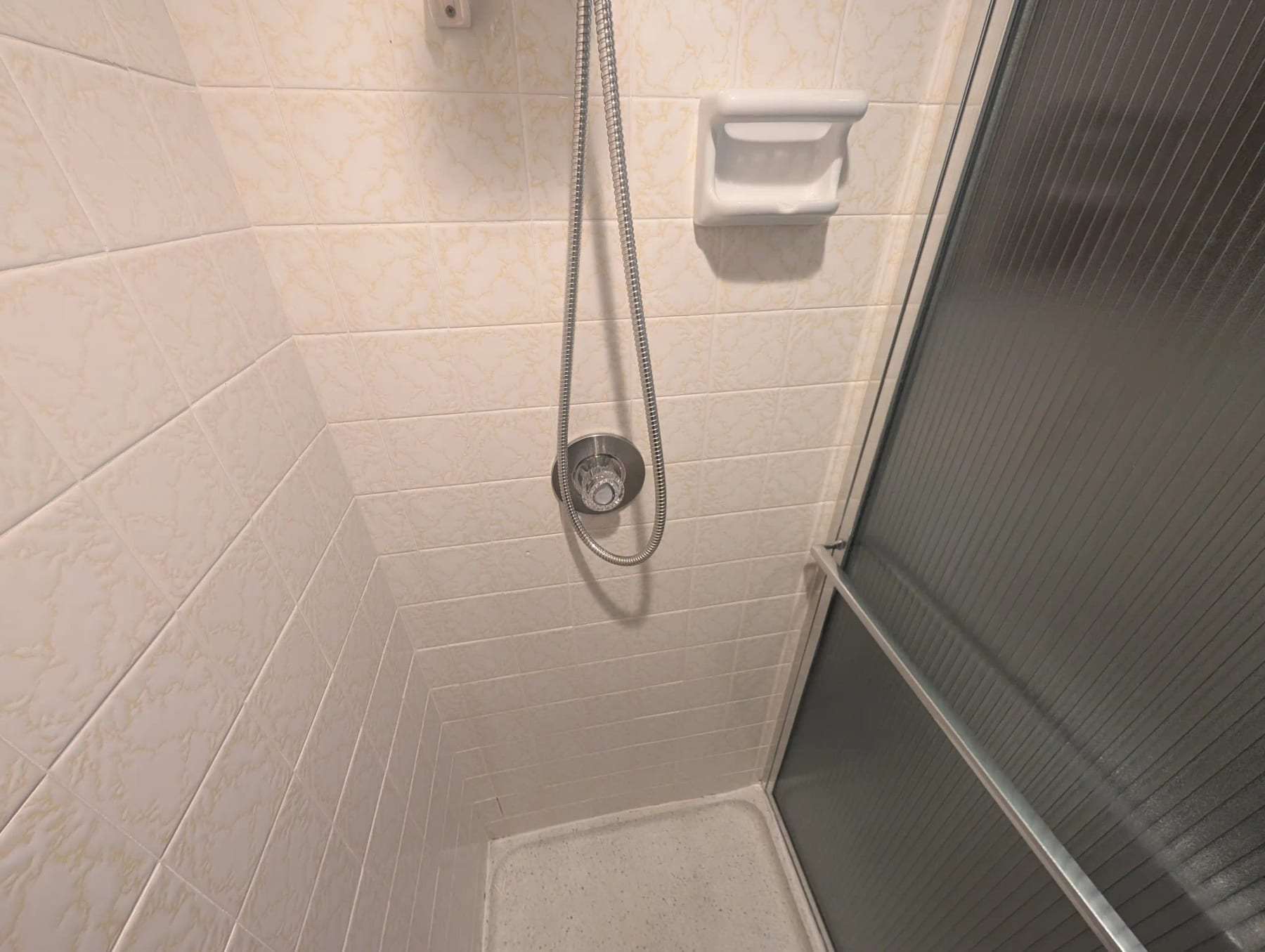
Shower stall with a handheld shower head and a soap dish. Shown to illustrate the work described; not a job for this site or at any address named here.
How the checks unfold
- Day one
- The family smells the bathroom with the door closed, then each fixture in turn, and notes the smell is strongest at the shower drain.
- Day one, later
- They pour a quart of water into the shower drain and the floor drain nearby and wait a few minutes.
- Day two
- The smell is much weaker. They run the sink and flush the toilet and find no remaining odor in the room.
- Day five
- The smell returns faintly after a windy night, so they note a possible vent question.
- Week two
- They ask a plumber to check the vent connection and the trap arm because the smell is not fully gone.
What a sensible path looks like
Illustrative example. Not a real job or customer.
A dry trap is the simplest explanation, but a repeat smell suggests another cause may be involved.
- Refill every trap in the basement, including the floor drain, laundry standpipe and any unused sink.
- Run each fixture for a minute so the trap fills and flushes the line.
- Note whether the smell returns and what the weather and household activity were.
- If it returns, ask a plumber to inspect venting, the connection at the slab and any capped rough-ins.
- Keep the finished room ventilated while the cause is being checked.
In the imagined outcome, the dry shower trap explained most of the smell, and a loose cap on a nearby unused rough-in explained the rest. After the cap was fitted correctly, the smell did not return. This is an invented result for illustration only.
Common questions
Why does a dry trap smell?
The trap's water seal blocks drain gases. When the water evaporates, nothing stops gas from entering the room.
General information for Highlands Ranch, not a quote or professional advice. In an emergency, call 911.